Introduction
Corporate stationery reflects how professional an organisation is. It is more than printed sheets or envelopes; it is part of the visual identity that customers and business partners see every day.
When all printed materials use consistent designs, colours and logos, they communicate confidence and organisation and help make the brand more memorable.
This guide introduces the key elements of corporate stationery, explains why they matter, and shows how to design and print them in a way that reflects your business professionally.
What Is Corporate Stationery?
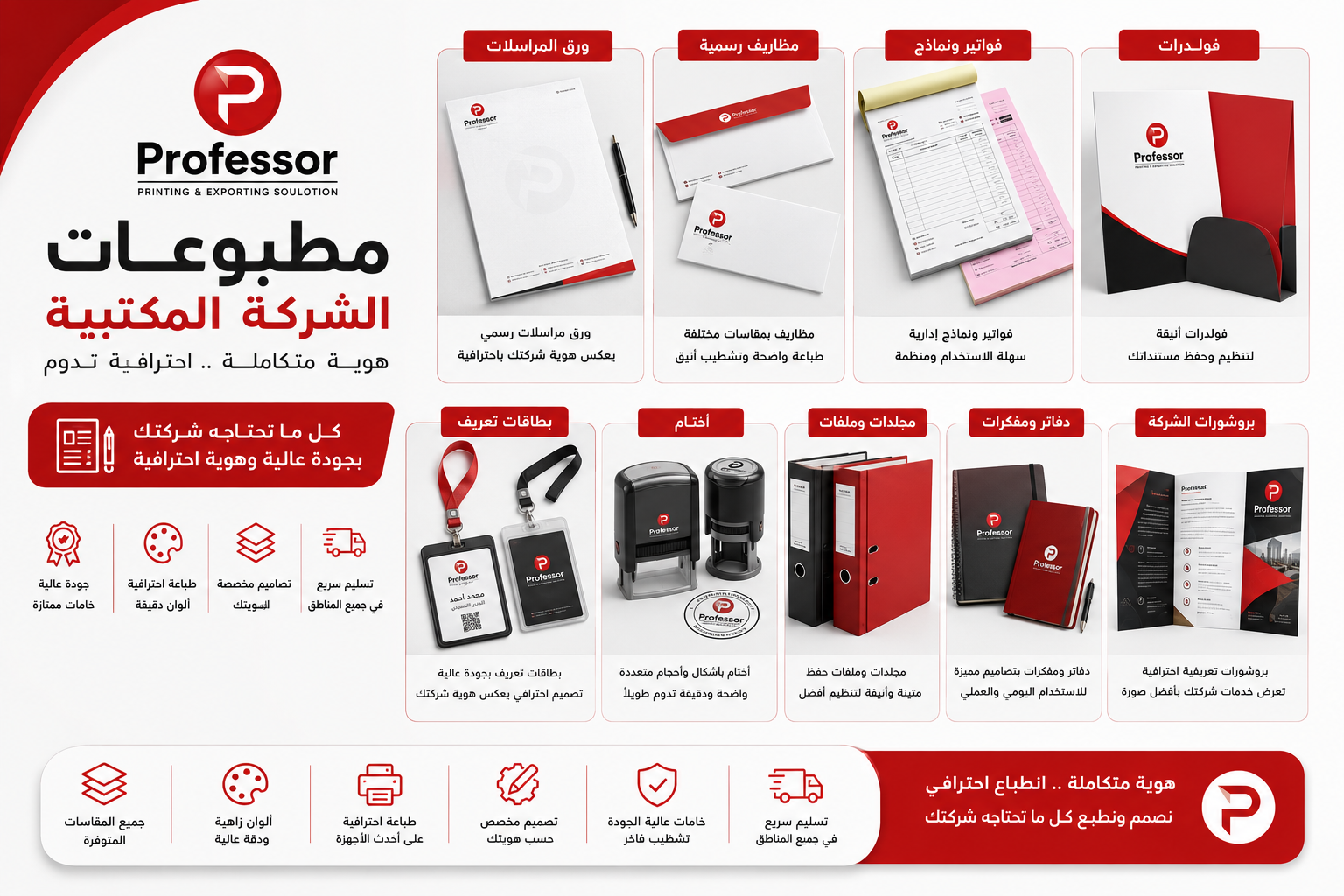
Corporate stationery includes the documents and paper-based materials that carry a company’s identity and are used in everyday dealings with customers, suppliers and employees.
These materials include:
- Letterheads.
- Envelopes.
- Presentation folders.
- Notebooks.
- Administrative forms.
- Internal identification cards.
- Printed memos.
Using one consistent design across these items strengthens the company’s professional image and shows attention to detail.
Why Is Company Stationery Important?
Despite the shift towards digital communication, printed materials still play an important role in many business activities, meetings and formal agreements.
Key benefits include:
- Strengthening visual identity.
- Building customer confidence.
- Presenting a professional image.
- Keeping documents consistent.
- Supporting the brand in every interaction.
Every document carrying your company logo is an opportunity to reinforce your image with customers.
When Does Your Business Need Company Stationery?
Any business can benefit from professional stationery, especially when it:
- Sends quotations.
- Signs contracts with customers.
- Issues official documents.
- Takes part in meetings and exhibitions.
- Works with suppliers and business partners.
Even start-ups can build trust from the beginning by using a coordinated printed identity.
First Essential: Letterheads
Letterheads are one of the most important elements of a company’s printed identity. They are used for:
- Official letters.
- Quotations.
- Contracts.
- Internal and external correspondence.
A professional letterhead should include:
- Company logo.
- Contact details.
- Website.
- Address.
- Consistent visual identity.
Printed Corporate Envelopes
Envelopes may seem like a small detail, but they are often the first thing a customer sees when receiving an official document.
A professionally designed envelope gives the impression that the company is organised and attentive to detail.
It is usually best to include:
- Company logo.
- Trading name.
- Address.
- Contact details.
- Website.
The envelope design should also match the rest of the company’s visual identity.
Presentation Folders
Presentation folders keep documents, proposals and contracts organised and make them easier to present professionally.
They are especially useful during:
- Meetings.
- Presenting quotations.
- Conferences.
- Exhibitions.
- Customer meetings.
A well-designed folder makes documents easier to present and leaves a positive impression on the customer.
Notebooks and Notepads
Notebooks and notepads are used inside companies, at events and in training sessions. They can also make effective promotional gifts when printed with a company logo.
They can be customised with:
- Company logo.
- Visual identity colours.
- Contact details.
- Custom internal pages.
These items help keep the brand visible over time.
Printed Administrative Forms
Many companies rely on paper forms to organise daily operations, such as:
- Purchase orders.
- Invoices.
- Payment and expense forms.
- Leave requests.
- Product receiving and delivery forms.
- Work reports.
Using a consistent design for these forms helps organise work and gives the company a more professional appearance.
Do All Companies Need the Same Stationery?
No.
Different businesses need different combinations of printed materials.
For example:
- Industrial companies need operational forms and reports.
- Trading companies rely on quotations and invoices.
- Engineering offices often use folders and letterheads.
- Medical centres depend on medical forms and patient files.
Company stationery should therefore be selected according to the nature of the business.
Make Every Printed Item Reflect One Identity
One of the most important factors in successful company stationery is keeping the visual identity consistent across all items.
All printed materials should use consistent:
- Logo.
- Colours.
- Fonts.
- Design style.
- Placement of contact details.
- How the visual identity is applied.
This consistency helps customers recognise your brand and strengthens its professional image.
How Does Stationery Affect Your Company’s Image?
A customer may first encounter your company through a quotation, contract or formal letter. The quality of these materials therefore has a direct effect on that first impression.
Professional stationery helps to:
- Building trust.
- Presenting professionalism.
- Strengthening brand value.
- Improving the customer experience.
- Differentiating the company from competitors.
This is why established companies invest in producing their documents to the same quality standard.
Choose the Right Paper for Each Item
Not every printed item should use the same paper. The material should be selected according to how the item will be used.
For example:
- Letterheads should use premium white paper with a suitable weight.
- Folders need thicker stock to withstand frequent handling.
- Envelopes need a durable material that prints well.
- Notebooks depend on their intended use and page count.
Choosing the right paper improves the finished appearance and helps printed materials last longer.
Finishing Adds a Professional Touch
The appearance of printed materials can be enhanced with different finishes, such as:
- Matte lamination.
- Gloss lamination.
- Spot UV.
- Hot foil stamping.
- Embossing.
- Debossing.
These finishes can highlight a logo or important design elements, especially on premium folders and envelopes.
Design Mistakes to Avoid in Company Stationery
Common mistakes include:
- Using more than one logo across the stationery set.
- Using inconsistent colours between items.
- Changing fonts from one printed item to another.
- Using low-resolution images.
- Overloading the design with information.
- Leaving insufficient print margins.
Avoiding these mistakes keeps the visual identity professional and makes the full stationery set look consistent.
Review Every Item Before Approval
Before sending any item to print, check every detail. Even a small mistake can affect how customers view the company.
Always review:
- High-resolution vector logo.
- Correct and current contact details.
- Website address.
- Email address.
- Telephone numbers.
- Consistent brand colours.
- Alignment with the brand guidelines.
- High-quality images and graphics.
For larger quantities, it is also a good idea to check a printed proof before approving production.
How to Keep Your Company Identity Consistent Over Time
As a company grows, it may add new services or products, but its printed materials should remain aligned with the core identity.
To maintain consistency:
- Use brand guidelines.
- Update all materials when the logo or company details change.
- Keep the design files consistent.
- Work with one provider to coordinate the design and printing of all materials.
These steps help the company maintain a stable, professional image in front of customers.
Frequently Asked Questions
What does Company Stationery mean?
It is the set of official printed materials a company uses in its daily business, such as letterheads, envelopes, folders, notebooks and administrative forms.
Do small businesses need corporate stationery?
Yes. Professional printed materials help even new businesses build trust and appear credible to customers.
Can I order small quantities?
Yes. Suitable quantities can be produced for small businesses or trial orders, depending on each customer’s needs.
Can a QR code be added to printed materials?
Certainly. A QR code can direct customers to the company website, WhatsApp or its company profile.
What is the best paper for letterheads?
The right choice depends on how the letterhead will be used. High-quality paper with a suitable weight is generally recommended for a professional result.
Should all stationery items have the same design?
They should follow the same visual identity, including colours, fonts and logo use, to create a consistent appearance.
Can stationery be updated later?
Yes. Designs and company details can be updated when the brand identity or contact information changes.
Which stationery items are most important for a company?
Letterheads, envelopes, presentation folders and quotation forms are among the most commonly used items for many businesses.
Why Choose Professor Print for Your Company Stationery?
At Professor Print, we help businesses build a coordinated printed identity that communicates professionalism in every interaction.
We provide:
- Professional design aligned with your visual identity.
- High-quality printing and accurate colours.
- A variety of materials and finishes.
- Fast production.
- Options for different order quantities.
- Free advice on choosing suitable materials and finishes.
Build Your Company’s Printed Identity Today
If you want professional company stationery that reflects the strength of your brand and makes a positive impression on customers, the Professor Print team is ready to help design and produce your business stationery to a high standard.
Contact us today for a free consultation and a quotation tailored to your company’s needs.