Introduction
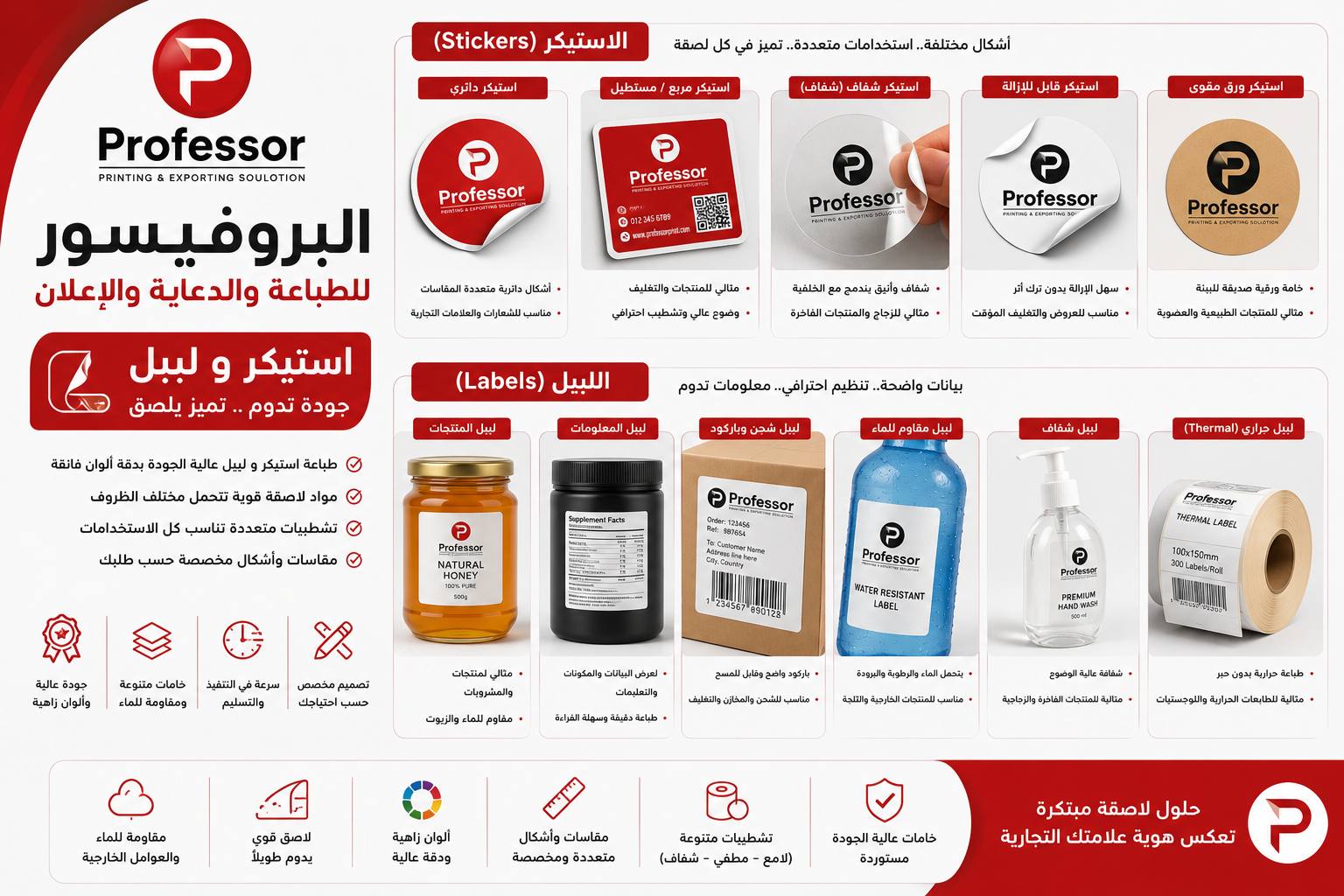
There is no single type of sticker that suits every product. Each product needs a different material depending on how it will be used, its storage environment and the type of packaging. Choosing the right option helps preserve label quality, present the product professionally and improve the customer experience.
Whether you run a factory, a store or a brand, understanding sticker types and their applications helps you make the right decision before printing and avoid the cost of having to reproduce the labels.
How Do Sticker Types Differ?
Stickers are made from different materials to suit a range of conditions. Some products are exposed to water, others need scratch resistance, while some brands rely on a premium appearance to attract customers.
Sticker types therefore differ in:
- Material.
- Adhesive strength.
- Water resistance.
- Print quality.
- Available finishes.
- Expected service life.
- Intended application.
Paper Stickers
Paper stickers are one of the most widely used options for products that are not exposed to moisture. They are easy to print and economical, making them suitable for larger quantities.
Key Features
- Economical cost.
- Excellent colour quality.
- Easy to print.
- Suitable for large quantities.
Best Applications
- Offers and price labels.
- Cardboard packaging.
- Dry products.
- Paper bags.
- Interior labels.
PVC Stickers
PVC stickers are resistant to water and moisture, making them suitable for products exposed to daily handling or different storage conditions.
Key Features
- Water-resistant.
- Scratch-resistant.
- Long service life.
- Suitable for indoor and outdoor use.
Best Applications
- Cosmetics.
- Shampoo.
- Cleaning products.
- Water bottles.
- Medical products.
Transparent Stickers
Transparent stickers are a popular choice for brands that want the packaging itself to remain visible rather than covering it completely. Their clear material allows the design to appear as if it is printed directly on the product, giving the package a refined, modern look.
Key Features
- Premium, contemporary appearance.
- Showcase the colour of the container.
- Resistant to water and moisture.
- Suitable for simple designs.
- Give the product a professional appearance.
Best Applications
- Perfumes.
- Juices.
- Skincare products.
- Bottles.
- Premium products.
Silver and Gold Stickers
These stickers add a premium touch to products. Their metallic surface reflects light and attracts attention, which is why they are often used for luxury products and gifts.
Key Features
- Premium appearance.
- Attractive light-reflecting surface.
- Help highlight the brand identity.
- Suitable for colour printing.
Best Applications
- Perfumes.
- Chocolate.
- Gifts.
- Premium products.
- Special-occasion packaging.
Vinyl Stickers
Vinyl stickers are among the most durable types and offer strong resistance to external conditions. They are therefore used where high durability is required, such as on vehicles, shopfronts and signs.
Key Features
- Resistant to sunlight and rain.
- Suitable for outdoor use.
- Scratch-resistant.
- Long service life.
- Suitable for different surfaces.
Best Applications
- Vehicles.
- Shopfronts.
- Signs.
- Equipment.
- Appliances.
Roll Labels
Roll labels are produced on reels and used with production lines and automatic labelling machines. This makes them an ideal choice for factories that need speed and accuracy during packaging.
Key Features
- Fast application.
- Suitable for high-volume production.
- Reduce packaging time.
- High accuracy.
- Help reduce waste.
Best Applications
- Food factories.
- Pharmaceutical factories.
- Cosmetics factories.
- Filling and packaging lines.
- Industrial products.
Sheet Labels
Sheet labels are printed on flat sheets containing multiple stickers. They are commonly used for small quantities or manual applications that do not require a production line.
Key Features
- Suitable for small quantities.
- Easy to store.
- Suitable for manual application.
- Economical for start-ups and small businesses.
Best Applications
- Small projects.
- Manual packaging.
- Gifts.
- Home-made products.
Each sticker type has a different application. The table below helps you choose an option based on your product and how the label will be used.
| Type | Water Resistance | Print Quality | Indoor Use | Outdoor Use | Price Level |
|---|---|---|---|---|---|
| Paper | ⭐ | ⭐⭐⭐⭐⭐ | ✅ | ❌ | Economical |
| PVC | ⭐⭐⭐⭐⭐ | ⭐⭐⭐⭐ | ✅ | ✅ | Medium |
| Transparent | ⭐⭐⭐⭐⭐ | ⭐⭐⭐⭐⭐ | ✅ | ✅ | Medium to high |
| Gold / Silver | ⭐⭐⭐⭐ | ⭐⭐⭐⭐⭐ | ✅ | ⚠️ | High |
| Vinyl | ⭐⭐⭐⭐⭐ | ⭐⭐⭐⭐ | ✅ | ✅ | High |
| Roll | Depends on material | ⭐⭐⭐⭐⭐ | ✅ | Depends on material | Depends on quantity |
| Sheet | Depends on material | ⭐⭐⭐⭐⭐ | ✅ | Depends on material | Economical |
How Do You Choose the Right Sticker Type?
Choosing a sticker is not only about appearance. You also need to consider how the product will be used and the environment in which it will be kept.
If the product:
Will Be Exposed to Water
Choose:
- PVC.
- Transparent material.
- Vinyl.
Will Be Used Only Inside a Store
Choose:
- Paper.
- Sheet labels.
Needs a Premium Appearance
Choose:
- Gold.
- Silver.
- Transparent material.
Will Be Produced in Large Quantities
Choose:
- Roll labels.
Will Be Used Outdoors
Choose:
- Vinyl.
Does Sticker Material Affect Print Quality?
Yes.
Different sticker materials do not produce exactly the same print results. Colour clarity and detail vary depending on the material.
For example:
- Paper produces strong, saturated colours.
- Transparent material needs a suitable design so that its elements remain clear.
- Gold and silver add a premium appearance but require carefully planned artwork.
- PVC helps maintain colour quality over long periods, including with everyday use.
Choosing the right material makes the product look more professional and strengthens the impact of its visual identity.
Common Mistakes When Choosing Stickers
Many business owners make mistakes that can damage the label or weaken the appearance of the product.
Some of the most common mistakes are:
- Using paper stickers on containers exposed to water.
- Choosing a material that does not suit the product surface.
- Ignoring the appropriate sticker size.
- Using artwork with details that are too small.
- Choosing a weak adhesive for products that are handled frequently.
- Focusing only on price without considering quality.
Avoiding these mistakes helps protect product quality and reduce the cost of reprinting.
Can Stickers Be Produced in Any Shape?
Yes. Stickers can be produced in a variety of shapes to suit the product.
Common shapes include:
- Round.
- Square.
- Rectangular.
- Oval.
- Custom die-cut.
- Roll format.
- Sheet format.
Custom sizes and shapes can also be produced to suit the product design and brand identity.
What Determines the Cost of Sticker Printing?
Sticker printing costs vary according to several factors, so there is no single fixed price for every product.
The main factors affecting the price include:
- Sticker material.
- Dimensions.
- Cutting shape.
- Required quantity.
- Type of finish.
- Number of colours.
- Supply format (roll or sheet).
Choosing suitable specifications helps achieve the right balance between print quality and cost.
Frequently Asked Questions
Which Sticker Types Are Used Most Often?
PVC and paper stickers are among the most commonly used types. The right choice depends on the product and its intended environment.
Are All Stickers Water-Resistant?
No. Paper stickers do not withstand moisture, while PVC, vinyl and transparent sticker materials offer a higher level of water resistance.
Which Sticker Type Is Best for Cosmetic Containers?
PVC or transparent stickers are often preferred because they withstand everyday use and help maintain print quality.
Can Stickers Be Produced in Any Shape?
Yes. Stickers can be produced as circles, squares, rectangles, ovals or custom die-cut shapes according to the design.
What Is the Difference Between Roll and Sheet Labels?
Roll labels are suitable for production lines and large quantities, while sheet labels are better for small businesses and manual application.
Can You Produce Small Quantities?
Yes. Small and large quantities can be produced according to the customer’s requirements.
Does the Material Affect a Sticker’s Service Life?
Absolutely. Choosing the right material extends the label’s service life and helps preserve its appearance and print quality.
Can a Barcode or QR Code Be Added?
Yes. Barcodes and QR Codes can easily be added to different types of labels and stickers.
Why Choose Professor Print for Sticker Printing?
At Professor Print, we provide sticker and label printing solutions for different industries and help you select the right material according to your product and how it will be used.
We provide:
- A wide range of sticker types.
- Paper, PVC and transparent materials.
- Roll and sheet labels.
- Custom die-cutting to match the design.
- Professional finishing options.
- High-quality printing.
- Efficient production.
- Competitive pricing.
Request a Free Consultation to Choose the Right Sticker
If you are unsure which sticker type is best for your product, the Professor Print team can help you choose the right material, size and finish before production begins.
Contact us today for a free consultation and a quotation tailored to your project.